Common Pitfalls and How to Avoid Them
- Undersizing the Inverter: Selecting an inverter with a capacity below 90 % of the array’s DC rating leads to clipping during peak sun hours. Always size the inverter at 100–110 % of the DC capacity.
- Ignoring Local Grid Codes: Each utility may have different anti‑islanding and voltage ride‑through requirements. Failure to comply can result in disconnection penalties.
- Overlooking Shading Dynamics: Even small obstructions (e.g., HVAC units) can reduce module output dramatically. Use micro‑inverters or power optimizers to mitigate localized shading.
- Skipping Performance Monitoring: Without a monitoring platform, underperformance may go unnoticed for months, eroding ROI.
Optimizing Energy Yield: Advanced Strategies
Maximum Power Point Tracking (MPPT) per String
Modern inverters equipped with MPPT per string can adjust the operating voltage of each string independently, extracting more power from partially shaded modules. Studies from the Solar Energy Research Institute (2025) show a 3–5 % increase in annual energy yield when MPPT is applied at the string level versus a single global MPPT.
Temperature‑Compensated Modules
Temperature coefficient (°C) influences output; low‑temperature‑coefficient modules (‑0.30 %/°C) maintain higher efficiency on hot days. Pairing these modules with a well‑ventilated mounting system reduces thermal losses.
Dynamic Reactive Power Control
Some grid operators incentivize solar farms that can provide reactive power support. Inverters with Volt‑Var control can supply or absorb reactive power, improving grid stability and earning ancillary service revenues.
Table of Contents
- Common Pitfalls and How to Avoid Them
- Optimizing Energy Yield: Advanced Strategies
- Maximum Power Point Tracking (MPPT) per String
- Temperature‑Compensated Modules
- Dynamic Reactive Power Control
- Future‑Proofing Your Installation
- FAQ – Quick Answers for Professionals
- Can I install a grid‑tie system on a commercial building with an existing backup generator?
- What is the typical lifespan of a grid‑tied inverter?
- How does net‑metering differ from feed‑in tariffs?
- Do I need a separate permit for adding a battery later?
Future‑Proofing Your Installation
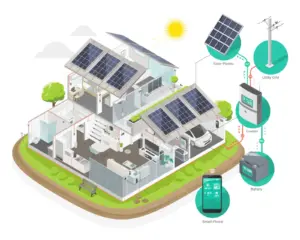
While a pure grid‑tie system offers the highest immediate efficiency, consider planning for optional battery integration. A modular battery storage solution can be added later to provide backup during grid outages or to shift excess generation to peak‑price periods—a concept explored in solar installation with battery storage. Additionally, smart home energy management platforms enable demand‑side response, further enhancing ROI.
FAQ – Quick Answers for Professionals
Can I install a grid‑tie system on a commercial building with an existing backup generator?
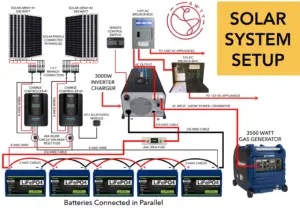
Yes. The solar array can operate in parallel with the generator, using a transfer switch that prioritizes solar generation and only engages the generator when both solar and grid power are unavailable.
What is the typical lifespan of a grid‑tied inverter?
Most manufacturers guarantee 12–15 years, with many inverters operating reliably for 20 years when maintained according to the OEM’s service schedule.
How does net‑metering differ from feed‑in tariffs?
Net‑metering credits the exact amount of electricity exported at the retail rate, whereas feed‑in tariffs often provide a fixed, usually lower, price per kilowatt‑hour exported.
Do I need a separate permit for adding a battery later?
Yes. Adding storage changes the system’s classification to a “hybrid” installation, requiring additional safety reviews and possibly a new interconnection agreement.