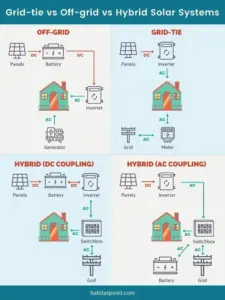
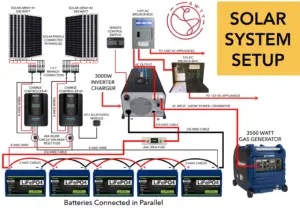
Upgrading to a solar energy system with integrated backup power is the most effective way for businesses to lock in long‑term savings while safeguarding operations against grid outages. By pairing photovoltaic (PV) arrays with modern energy storage, companies can reduce electricity bills, achieve grid independence, and protect critical loads—all within a single, scalable solution.
Why a Combined Solar‑Plus‑Storage Solution Is the Logical Next Step
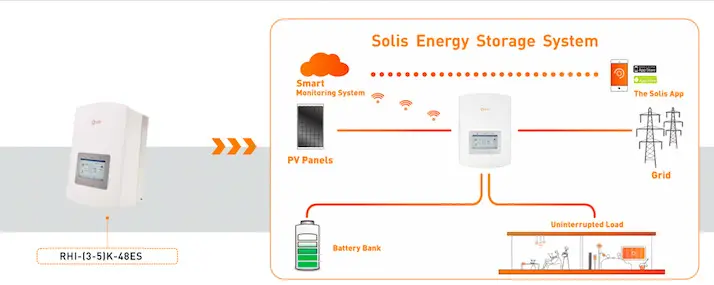
In 2026, the International Renewable Energy Agency (IRENA) reported that global solar capacity grew by 18 % year‑on‑year, and energy‑storage installations surged by 30 % (IRENA 2026). This twin‑growth reflects a market consensus: solar panels alone no longer deliver the resilience that modern enterprises demand. A solar‑plus‑storage system provides:
- Continuous power supply during utility outages, protecting data centers, manufacturing lines, and HVAC systems.
- Peak‑shaving capabilities that lower demand charges by discharging stored energy when tariffs are highest.
- Enhanced ROI through net‑metering and demand‑response incentives offered by most state utility programs.
Financial Impact in Real Numbers
According to the U.S. Energy Information Administration (EIA), commercial electricity rates averaged $0.13 /kWh in 2025, projected to rise 4 % annually. A 500 kW solar array with a 1 MWh battery can offset up to 70 % of that consumption, translating to roughly $90,000 in annual savings for a mid‑size facility. Over a 25‑year lifespan, the net present value (NPV) of such a system typically exceeds $1.8 million, with a payback period under six years when leveraging the Federal Investment Tax Credit (ITC) and state rebates.
Table of Contents
Key Components of an Efficient Upgrade

Designing a robust solar‑plus‑storage architecture involves three core elements:
- High‑performance PV modules: Choose panels with a minimum 22 % efficiency rating and temperature coefficients below –0.35 %/°C to maximize output in hot climates.
- Advanced battery technology: Lithium‑ion batteries dominate the market due to their high energy density and cycle life (>5,000 cycles). For applications requiring deeper discharge, flow batteries are emerging as a viable alternative.
- Smart energy management system (EMS): Real‑time monitoring and AI‑driven dispatch algorithms optimize when to charge, discharge, or sell back to the grid.
Businesses that integrate a smart energy monitoring system typically see a 12 % additional reduction in operational costs, as the EMS can predict peak periods and pre‑emptively shift loads.
Choosing the Right Storage Capacity
Rule of thumb: size the battery to cover 4–6 hours of critical load. For a facility with a 300 kW peak demand, a 1.5 MWh battery provides sufficient buffer to ride through most utility outages while still participating in demand‑response events. Conduct a load‑profile analysis—preferably using a 12‑month data set—to avoid over‑ or under‑provisioning.
Step‑by‑Step Guide to Upgrade Your Solar System
Below is a practical roadmap that ensures a smooth transition from a conventional solar installation to a fully integrated backup solution.